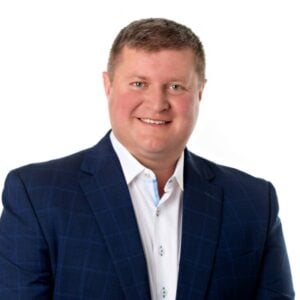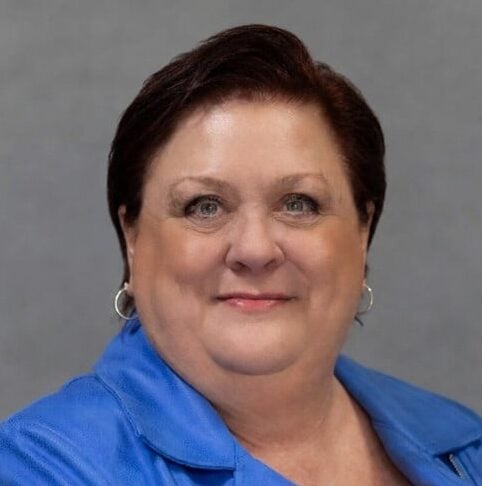
By Robin Ferré, Executive Search Director, Toronto
One year after becoming Executive Director of FARFO, how do you look back on your first year?
I would describe it as both a demanding and deeply rewarding year. I discovered a large extended family of members, volunteers, seniors’ clubs and active living centres, all remarkably committed to the well-being of Francophone seniors.
We were able to move forward with concrete initiatives such as Éclaireurs de proximité and Employabilité 50+, while also beginning important work on governance, including strategic planning and a review of our bylaws.
Above all, I value the relationships I’ve built with regional FARFO organizations across the province, which have given me a much deeper understanding of the realities people experience on the ground.
What attracted you to FARFO and its mission at this point in your career?
After more than 20 years in community leadership, in education, health care and the municipal sector, I wanted to put that experience to work for a mission that resonates with me personally: ensuring the dignity and full participation of Francophone seniors.
Throughout my career, I have always come back to the same question: how can we best serve our Francophone community, particularly in a minority-language setting?
My experience with the Conseil scolaire catholique du Nouvel-Ontario, the North East Local Health Integration Network, Collège Boréal and the Municipality of Markstay-Warren has consistently brought me back to that same concern. FARFO represented a unique opportunity to bring all of those dimensions together, including health, education and municipal governance, in service of seniors, right here in Northern Ontario, where I have built my entire career.
After more than 30 years in your career, how does your experience influence the way you lead today?
Every stage of my career has shaped the way I lead today. My time as Dean of the School of Health Sciences at Collège Boréal taught me the importance of building sustainable teams and programs.
As Chief Administrative Officer and Clerk for the Municipality of Markstay-Warren, I managed a budget of $5 to $6 million and a team of 24 while successfully completing the process of making the municipality officially bilingual. That experience taught me the importance of sound management and of grounding decisions in the real needs of the community.
My governance experience, particularly with the North East LHIN, Simulation Canada and the Réseau du mieux-être francophone du Nord de l’Ontario, convinced me that the most sustainable form of leadership is one that listens before acting and values collaboration over silos.
Is the Francophone experience the same throughout Ontario? What differences do you see between the various regions of the province?
No, absolutely not, and that has been one of the biggest lessons of my first year.
In Northern Ontario, where I have lived all my life, we have strong, historic communities, but significant gaps remain. In Sudbury, for example, there are no beds officially designated for Francophones, a situation I publicly denounced during the États généraux.
In Southwestern Ontario, communities tend to be more dispersed, and access to French-language health services requires a different approach to planning. In the Greater Toronto Area, the Francophone community is increasingly shaped by Francophone immigration and growing cultural diversity.
Every region has its strengths and its blind spots, which calls for a flexible approach rather than a one-size-fits-all solution across the province.
We therefore see very different realities from one region to another. In this context, do Francophone minority-language organizations face particular challenges in attracting and retaining Francophone or bilingual leaders and talent?
Yes, clearly. The pool of fully bilingual leaders who are deeply rooted in the Francophone community is limited, and these individuals are in demand across several sectors at once, including health care, education, municipalities and community organizations.
Our organizations, which often have fewer resources, must compete with employers that can sometimes offer more attractive conditions. This is why succession planning and mentorship are so important: we need to prepare the next generation of Francophone leaders well before we need them.
How do you view succession and the transfer of knowledge between generations within Francophone organizations?
This is an issue that is central to my vision. Knowledge transfer does not happen by chance: it needs to be structured through mentorship, the documentation of our institutional memory and concrete opportunities for intergenerational collaboration.
Initiatives such as Employabilité 50+ also show that seniors still have a great deal of experience to contribute to the workforce, and that succession is not about setting experience aside, but about combining it with the energy of emerging generations.
What role can the experience of seniors play in governance, on boards of directors and, more broadly, within our organizations?
A central one.
Seniors bring institutional memory, judgment developed over the years and a sense of perspective that is often missing on boards caught up in the urgency of day-to-day matters. I strongly believe in intergenerational boards, where the experience of seniors is brought into conversation with the vision of younger directors. This is exactly the kind of balance we are working to strengthen at FARFO, particularly through our strategic planning process.
Looking ahead to the next few years, what makes you optimistic about the future of Ontario’s Francophone community?
This is an issue that is central to my vision. Knowledge transfer does not happen by chance. It needs to be structured through mentorship, the documentation of our institutional memory and concrete opportunities for intergenerational collaboration.
Initiatives such as Employabilité 50+ also show that seniors still have a great deal of experience to contribute to the workforce, and that succession is not about setting experience aside, but about combining it with the energy of emerging generations.