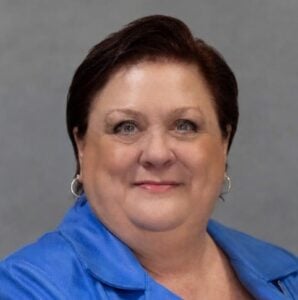
Our Edmonton Managing Partner Janine Hill sat down with Shawn McMillan, CPA, CA, ICD.D, an Edmonton-based fractional CFO and executive advisor, to discuss how finance leadership is evolving, why more businesses are turning to fractional executive models, and what Alberta organizations should be thinking about as they build leadership capacity for growth, transition, and complexity.
You’ve worked as a senior finance executive inside organizations and now as a fractional CFO. What has changed most in how companies think about finance leadership?
I would say that for the most part, companies haven’t changed how they view financial leadership. Many still treat it as overhead until an event forces the issue. The shift happens when a company truly understands that financial leadership is a value driver, not just a cost centre. That change comes from the top: the CEO, the ownership, genuinely changing how they see the CFO role. And it comes from the financial leader earning that view, by bringing perspective to the table and educating the team that this isn’t about being a bean counter. It’s about seeing the holistic picture, being a partner in better decision-making, managing risk differently, and translating numbers into action.
A great fractional CFO can show a CEO and executive team, who may never have had a real financial leader, what that value looks like before they’re ready to need it full-time.
What experiences have most shaped how you approach the CFO role today?
It’s the accumulation of everything, from manual tasks and junior roles all the way to sitting at the CFO table and navigating real complexity. Understanding a business from the ground up builds genuine appreciation for your team: the people on the front lines, the ones generating revenue, the ones who make the business run. That’s where empathy comes from.
The CFO role can be cold. When you’re looking at everything through a financial lens, you get a reputation for being cold-hearted. Sometimes you have to make the tough calls that others can’t or when they don’t want to. But you also have to understand who you’re affecting.
The challenges I took on over the years, including the ones I didn’t always get right, shaped how I approach leadership today. If I hadn’t been willing to step into difficult situations, I wouldn’t have the depth I do now. We all have to learn from what we fail at. And we have to be willing to fail to get better. As well as learn from others failures.
The other thing I can’t say enough about is mentors. The mentors I’ve had, and still have, have had a profound impact on how I see and approach this work. They come in every shape: peer mentors, more experienced mentors, younger mentors. We have to appreciate all of them.
What are the signs that a company needs CFO-level leadership, even if it is not ready for a full-time hire?
There are no black-and-white signs. It depends on the team and the context. The telltale indicators are complexity and messiness: when the business gets harder to manage than expected, when banking relationships start to matter, when cash flow forecasting becomes critical. Those are the moments.
Around $3-5M in revenue, you should be looking for part-time help, at minimum a full-time accountant. As you grow toward $20M or $30M, you need a controller. Approaching $50M, you need a VP Finance. At greater scale, a full-time CFO. That being said, a company at any size benefits from having a CFO in the mix.
A fractional CFO can lean into strategy when you’re smaller, then evolve into more of a partner role at the mid-market level. The key is being honest about what the company actually needs, not just what title exists. Titles have become cheap. The person doing the role is what matters.
Where do organizations most often get stuck when it comes to finance, strategy, and decision-making?
They get stuck wanting perfect information. Information can never be perfect. You always have to make a trade-off between speed, accuracy, and cost. Businesses want fast results but don’t want to spend. Accountants want perfect accuracy but won’t sacrifice time. Neither extreme serves the business.
The bigger issue is when finance isn’t at the table early enough. I’ve seen it repeatedly: a project is ready to launch, the operations team is eager to go, and finance is scrambling to catch up. It launches, the integration fails, the systems aren’t in place, and everyone’s pointing fingers. Those problems are almost always avoidable if the finance partner is in the room from the beginning. The opposite is true if finance does not invite operations to the table, a 2 sided coin that needs to have both at the table.
Being a finance leader means you can’t be the person who walks in and says no to everything. You have to listen, interpret, and help drive better outcomes. You’re a partner, not a gatekeeper.
How should leaders think about the difference between a controller, VP Finance, and CFO?
It’s one of the most consistently misunderstood areas. The key is understanding how finance roles evolve as a business grows. Here is how I like to describe it:
- Bookkeeper (up to ~$3-5M): Transaction-based. Keeping the books accurate. Essential at the early stage.
- Controller ($5M-$30M): Closes the month-end, manages audits, produces meaningful management reports, leads the accounting team. Focused on accuracy and discipline in the day-to-day.
- VP Finance ($30M-$100M): A genuine business partner to operations. Financial expert first, but translates financial data into operational decisions, manages banking relationships, and helps build the structure of the finance function.
- CFO ($100M+): A leader first. Cross-functional, working across finance, FP&A, treasury, and beyond. The right hand to the CEO. Not just reporting what happened but enabling better decisions and managing enterprise risk.
A fractional CFO can support at any of these stages. Less so at the bookkeeper level, but increasingly valuable as a strategic mentor for controllers, a sounding board for VPs of Finance, and a thought partner for younger CFOs who want experienced perspective.
I always ask: is your CFO out there networking, building relationships, understanding the industry? Or are they spending all day in the office? The best financial leaders are engaged with the world outside their four walls.
What does a fractional CFO need to do early to build trust and create impact?
The first priority is understanding the business, unless there’s a genuine emergency to solve. You can’t come in and start changing things on day one. Seek first to understand. Meet the people. Establish your rhythm before you start making moves.
From there, you align. Not just on the agenda the CEO had before you arrived, but on what you’re discovering as you get deeper into the business. You’re going to see things differently. Use that lens to help shape the strategic agenda for the next 90 days.
Those first 90 days are an investment. Anyone who comes in and starts changing things immediately is bringing a template to a unique business. That destroys trust quickly. It doesn’t mean you avoid hard conversations during that period. You don’t have the luxury of staying comfortable. If you see something difficult, you raise it. That’s the job.
As a fractional executive, you have fewer hours than a full-time hire would. That makes the quality of those hours critical. Your past experience helps you get up to speed faster and ask better questions. But the fundamentals are the same: earn trust, stay close to the CEO, and never duck a hard conversation.
What are the benefits and limitations of fractional leadership compared to a permanent executive hire?
A permanent hire is dedicated to your business and only your business. More hours, more immersion, singular focus. That’s real. And with that comes full cost.
The value of fractional is access to senior expertise, sometimes at a level the business doesn’t yet need full-time, at a fraction of the cost. A fractional CFO paired with a strong VP Finance can be a powerful combination: strategy and experience from one, day-to-day execution from the other.
The limitations are real too. Fractional executives aren’t there full-time. They have bandwidth constraints. You need to be thoughtful about what goes on their plate and make sure the rest of the team is structured to execute on everything else. Every hour of that fractional time should be used at the highest value.
What I’d say to any CEO: be clear on what you actually need. If you need someone embedded in the trenches 40 hours a week, fractional probably isn’t the answer. But if you need strategic leadership, cross-functional perspective, and experienced judgement, and you’re willing to build the team around it, fractional can deliver significant return.
How should organizations approach succession and bench strength within their finance teams?
Succession should be ongoing, not a crisis response. The more senior you are, the more people you should actively be developing to take your role. Not because you’re leaving, but because having that depth protects the organization and develops your team.
Most organizations fail at this. They protect their position instead of developing their people, and then they’re caught flat-footed when they need to move up or move on. I was told once by the owner of a multi-billion-dollar company that if they had to hire an executive externally, it was a failure. That’s the standard and I think it holds.
I’ve had the privilege of watching four people from my teams go on to become CFOs, and many others become VPs. I’ve never worried about developing someone who then leaves. The alternative, keeping people down to protect yourself, is worse for everyone, including you.
The practical discipline: give people stretch opportunities. Let someone take on something new this month. Someone else the next. Don’t concentrate all your development in one person. Build depth across the team and then demonstrate the same investment downward. If you’re giving your direct reports stretch opportunities, encourage them to do the same for their teams.
I invest heavily in people who invest in themselves. That doesn’t mean spending money. It means showing up. Reading. Joining a board. Experimenting with new tools. People who are actively growing are the ones worth doubling down on.
What are you seeing in the Edmonton and Alberta business market right now?
Alberta is well-positioned. We have resources, people, and knowledge that the world craves, but we have to be willing to invest in ourselves and stop letting the IP and value we create leave the province. We develop technology here and let others capitalize on it. We upgrade and process our resources, then ship the gains elsewhere. If we stay at the processor level and don’t move up the value chain, we won’t take advantage of what’s in front of us.
We also have a significant succession opportunity, and a real risk that goes with it. Over the last 20 years, many of our major Alberta companies have been absorbed by multinationals. We’ve lost head offices. We’ve lost the white-collar decision-making that drives an economy forward. If the next wave of succession goes the same way, maximizing short-term sale value at the expense of keeping leadership rooted here, we’ll keep losing the talent and capital that builds long-term economic depth.
The other gap I see: the previous generation isn’t investing enough in the next one. There are emerging entrepreneurs who could go further with modest support from people who’ve already built something. That reinvestment, whether it’s capital, mentorship, or simply showing up for someone earlier in their journey, is how we build the economy we need for the next hundred years.
What advice would you give to a CEO, founder, or board trying to determine what kind of finance leadership they need next?
Be honest with yourself and with the process. Before you define the role, define what you actually want from the person. Are you willing to give them a real seat at the table? Are you willing to share the information they’ll need? Are you ready to have a genuine strategic partner, not just someone who reports numbers? Your answers change the profile you’re looking for.
Sometimes that means bringing in an outside perspective to help ask those questions. That could be someone like yourself Janine, who has those conversations with owners every day. It could be an advisor who comes in and assesses what the team has and what it truly needs. The best time to have those conversations is before you need to act. When you’re in a rush to fill a role, you make compromises. Start thinking about succession and leadership capacity when things are stable. That’s when you can be thoughtful.
Ask the hard questions: What are we prepared to invest in this person’s development and onboarding? What does the role actually require today, and in two years? If the current person is doing the same things in the same way and you want a different result, something has to change before you hire.
Lastly, don’t shortcut onboarding. The knowledge someone builds in their first 90 days pays dividends for years. Give it the time and investment it deserves.