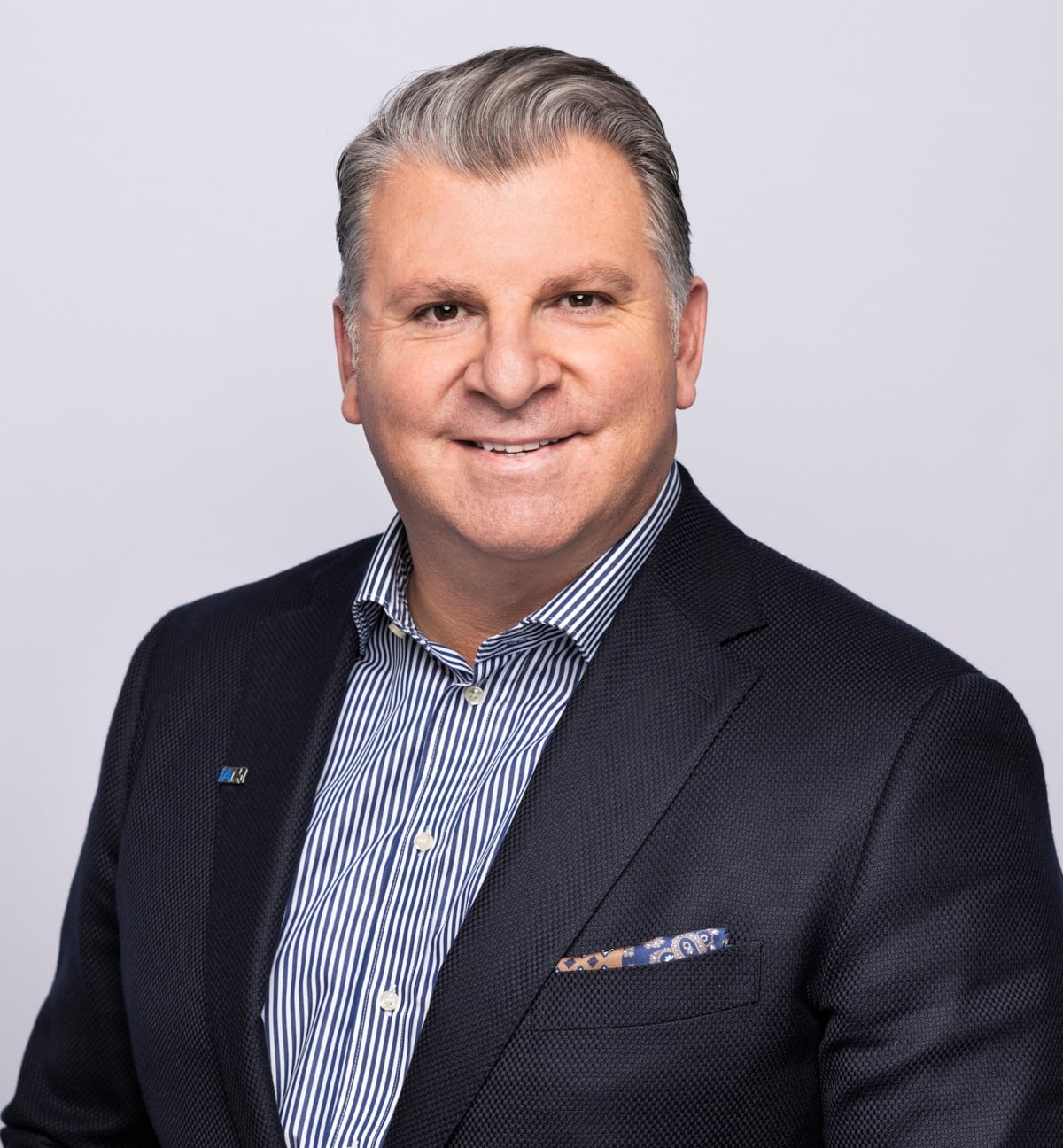
By: Yanouk Poirier, Managing Director, Montreal
What are the core values that guide your leadership style on a daily basis, particularly in complex environments such as insurance, technology or logistics?
I am someone who strives for excellence, mobilization, accountability and clarity of expectations, especially in complex environments. However, these elements can sometimes look rather un-human. I aim to combine these elements of performance with the respect and well-being of our talents. Yes, performance is a must, but people must be respected and heard, and above all understood.
Finally, when an employee performs less well, it’s as much the manager’s responsibility as his or her own, because managers often don’t fully understand their colleagues’ true strengths, and sometimes mandates are incorrectly assigned to the right people.
Your current role in global customer experience places you at the intersection of several teams and priorities. How do you inspire your staff to stay engaged in a context of continuous transformation?
The key success factors for making customer experience leadership work and prioritizing the right areas of organizational intervention are to work with multiple groups within the organization. In addition, the key is to ensure that the following success conditions are in place:
- This should be among the 3-5 strategic priorities of the CEO’s office and at board level – a top-down commitment often works better than a bottom-up initiative.
- This must be anchored in the company’s culture by clarifying the current state and the desired state.
- This must respond to a key business imperative, such as a desire to become more customer-centric, to integrate customer needs more fully into product design, or any other priority deemed essential by the company to progress or preserve an advantage.
- You need a centralized project team that works closely with the rest of the company and is constantly aligned to manage conflicting priorities. To inspire confidence, this team needs to understand existing priorities and not just impose its own. We need to be in tune, listen to each other and understand upstream!
- Finally, the idea of “show me the money” pretty quickly – it has to be linked to tangible financial results. In other words, it’s not inspiring to fall into management dogmas or good theories, it has to pay off financially too!
You have managed several major transformations in different industries. What was the most difficult decision you had to make as a leader, and what did you learn from it?
Decisions about who will make up your management team going forward are some of the hardest, and further transformation often requires a new team or some hard choices. Expecting big changes without changing the structure rarely works.
So, the hardest decisions are often related to people and staffing. What I’ve learned is that often, if a fit isn’t right or the people affected need to move on, it’s usually mutually understood. The difficulty of proceeding is often felt more by the leader than by the people affected.
So I’ve learned that when it comes to creating a new team, you can’t waste too much time and you have to listen to your intuition. Rarely are our intuitions wrong, but when we ignore them, we’re always wrong.
How do you approach the balance between performance, governance and team well-being in an environment where talent expectations are changing rapidly?
Basically, I don’t believe in a harmonious and perfect balance at work or in life, but rather in the often difficult choices that make all the difference. The non-negotiable elements of performance must be clearly identified, as must the elements of governance and a healthy environment. Then you have to name them, be rigorous and apply them.
But you shouldn’t try to please everyone or optimize these key elements as much as possible. Eventually, this creates a better balance, if you can call it that.
Warren Buffet invented the 5/25 rule, i.e. list your 25 life and career goals, then identify the top 5 and ignore the other 20. It’s easy to say, but those who do are often more successful.
You are very active on boards of directors, particularly in the healthcare and community sectors. Why is social commitment a priority for you?
There are 4 words that guide my reasons to do it:
- Privilege: in leadership we have the privilege of managing and guiding and inspiring and helping.
- Power: we wield a fair amount of influence as a leader, so we need to use that power wisely
- Impact: A leader’s gesture can create a ripple effect, so let’s use our impact to SUPPORT good causes.
- Duty: if we play a leadership role, I think we have to give back. It’s something my parents instilled in me and my parents were scientists without a leadership role, but they always gave back. I can’t help it! What’s more, I like to help, which makes me feel good, and it’s been proven that it’s good for both the people receiving help and those giving it!
I think there are too many causes to identify just one, because all causes are important and need support. My greatest source of pride is when we break fundraising records/goals and inspire people to get involved too!
How do you think a company’s social actions influence its internal culture and talent mobilization?
When a company has a coherent and engaging philanthropic strategy that is well communicated, it can mobilize a lot of people and create a very strong internal culture, which is the case at iA Financial Group. People are very committed and the internal culture of caring and involvement is very strong and very positive. It also creates leverage for recruitment and retention.
Both generations X, Y, and millennials often express their motivation to choose and favor employers who are involved in social actions.
After more than 20 years in organizational transformation, how do you define success today, both professionally and personally?
I see professional and personal success more and more as a whole. One of my great mentors often told me that it’s not enough to succeed in your career, you also have to succeed in your life. For me, success means having a positive and sustainable impact on everything we do at work and outside of work. Our personalities are unique and I don’t think we should separate the 2 types of success. Success means exceeding expectations while having a positive impact on the world and experiencing pleasure in doing so and giving pride and satisfaction to those around us, and helping grow the people we love. And to train, nurture and grow the people we love!
What skills or qualities will become essential for leaders in the coming years, particularly in a context where innovation and governance are taking center stage?
Basic skills like listening, perseverance, strategic thinking, financial understanding, etc. don’t change…but more and more, I’m seeing that greater emotional intelligence and adaptability and the ability to always want to learn will be essential. Not to be afraid of new technologies, but rather to learn and adapt to them.
You’ve led major projects in innovation, digital transformation and AI. Which emerging technologies do you see as the most promising for creating sustainable value for your customers?
There are several if I have to choose just two, that would be the power of AI in predictive analytics. In other words, using customer data to anticipate our customers’ needs. This is where we can have a big impact. The second is agentic AI, and using these technologies to better serve customers in real time at lower cost.